
A Turning Point for Personal Digital Learning
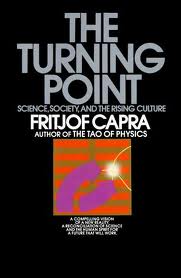 Fritjof Capra is a physicist who plowed the systems thinking ground for Peter Senge and the new science ground for Meg Wheatly. He opened his seminal piece The Turning Point by noting that man always assumes he is at a turning point. As a pattern spotter, I’m particularly susceptible to seeing turning points, but from the standpoint of global learning potential this decade really does appear to be pivotal in human history.
With Wikipedia, the last decade was the beginning of almost anyone can learn anything anywhere (Bonk, The World is Open). In this decade, the world will put the power of anywhere anytime learning to use through new and revitalized institutions and by empowering individual learners.
While economic concerns abound, I’m bullish on the global economy (particularly the back half of this decade) in large part because the appetite for and access to learning is changing the world. Here’s the macro equation:
- Global communications: mobile phones have connected the planet (e.g., there are more than 650 million cell phones in India alone) and broadband penetration is increasing worldwide.
- Global networks are opening markets, easing transactions, and spreading the flow of information.
- Democracy and free markets are slowly taking hold worldwide driven, in large part, by mobile and social technology.
- The appetite for and access to learning increases every year.
- The idea economy is rewarding learning and innovation and is creating a global middle class.
While cultural norms and family supports will vary, it will soon be possible to extend quality educational options to every young person on the planet. Free content, cheap devices, and low cost blended schools will extend secondary education to hundreds of million of students in developing economies.
This virtual cycle of learning and increased levels of prosperity will also bring about increased consumption—a profound problem we will all need to confront. Where policies block job creation, unrest will follow (i.e., more Egypts) but the macro trend of higher levels of literacy and more young people gaining access to post secondary learning and idea economy careers will be an enormous contribution to peace and prosperity.
If we drill down, it appears that 2012 will be the year where five mostly disconnected streams of tech-rich K-12 learning are finally connecting:
- Digital learning: the 20 year push for 1:1 computing that took hold in Australia in the early 90s and is now most frequently represented as the Maine and Mooresville models. The goal of this #edtech focused approach—advanced by groups like SETDA, COSN, and the Anytime, Anywhere Learning Foundation—is richness of experience, student as producer, and 21st century skills but with limited focus on productivity or options.
- Online learning: now common in higher education, #OnlineLearning in K-12 is growing by nearly 50% annually as states reduce barriers to access. Championed by iNACOL (where I’m a director), the focus has been on options and flexibility. Last year, the focus shifted to The Rise of Blended Learning.
- Mobile learning: the explosion of tablets and #mlearning apps over the last 24 months is the most dynamic space in education. It looks like many U.S. students will soon have a three screen day where they bring smartphones to school, use tabs or laptops, and occasionally work on a big screen or interactive whiteboard.
- Social learning: digital natives are now teaching digital natives and they’ve quietly adopted social learning tools like Edmodo, a Facebook-like platform for schools with over five million users. The #SocialLearning ability for teachers and students to create dynamic learning groups is helping to make the idea of grouping students by birthday seem rather quaint.
- Informal learning: A little bit of encouragement from the Hewlett foundation starting ten years ago led to what is now a flood of free and open content. While Khan Academy gets all the attention, there are hundreds of startups that offer peer-to-peer learning, tutorial support, learning games, test prep, and job training.
Districts and networks are beginning to mix and match innovations from these strands in new blended models that extend the day, personalize learning, and combine the best of online and onsite learning.
In the U.S., this confluence is being driven by the adoption of the Common Core State Standards and the planned shift to online testing in most states in 2014.
Worldwide, schools are benefiting from cheaper access devices—it just doesn’t make sense to buy a backpack full of books for kids anymore.
Behind the scenes, the improvement in application development platforms in the last 36 months has made it much easier and cheaper to develop great web and mobile apps. It’s now possible to build an app and gain some global traction in a fraction of the time and cost of a few years ago.
This confluence of forces is creating another virtuous cycle—new talent and investment. For many talented young entrepreneurs, the potential to power the shift to personal digital learning—to build an organization and make a difference—is very attractive.
Your history teacher probably told you the printing press was a turning point in human history. Just watch what the shift to digital learning will do. Better yet, create your way to lead the shift.
This blog first appeared on HuffingtonPost. Edmodo is a portfolio company of Learn Capital where Tom is a partner.

Autif Kamal
"Worldwide, schools are benefiting from cheaper access devices—it just doesn’t make sense to buy a backpack full of books for kids anymore."
I just downloaded Kindle and a book to my smartphone. Downloading a book is definitely much faster than ordering the physical book. It cuts down the shipping time to just have it downloaded right to my phone. That's another way in which it is more practical to download books than to purchase the physical ones.