


Learning STEM in Classrooms Modeling the Future
By Sim Barhoum
The typical elementary, middle and high school classroom is filled with chairs and desks, chalk and erasers, and a teacher and students. There is also closet space for backpacks, cabinet space for educational tools and wall space for exemplary student work. Does this traditional classroom provide the best teaching environment for teachers and the best learning environment for students? The answer depends on what needs to be taught, and we are quickly finding out that educational needs of the future look much different than the past.
It is widely known that American students are falling behind the world in the race for the jobs of the future. This is most apparent when looking at how job trends have led to the current political, legislative and cultural push for the advancement of STEM (Science, Technology, Engineering and Mathematics) curriculum.
What is STEM education?STEM is an acronym referring to Science, Technology, Engineering and Mathematics. It was officially named this by the U.S. Government. Why is STEM important?
Source: U.S. Dept. of Commerce |
The future is STEM jobs
According to the Bureau of Labor Statistics, STEM jobs are likely to increase 17 percent from now until 2018. STEM degrees are logical pathways to STEM jobs, as more than “two-thirds of the 4.7 million STEM workers with a college degree has an undergraduate STEM degree.” Interestingly, many STEM workers have different degrees than the jobs they end up doing. “Only 35 percent of college-educated computer and math workers have a degree in computer science or math while 27 percent majored in the physical or life sciences or engineering.”
Additionally, a STEM degree unlocks the door to a host of other career opportunities. According to the Department of Commerce “almost two-thirds of the 9.3 million workers with a STEM undergraduate degree work in a non-STEM job.” For example, one-fifth of math majors go on to work in the education field.
The future is STEM curriculum
Some of the main advancements in the world, including medicine, energy and technology, have come from the minds of those that studied in the areas of STEM. The STEM workforce has also had a significant impact on a nation’s competitiveness, economic future and standard of living.
This is one of the main reasons why there is a push for public schools across the country to add STEM curriculum, and one such example is the teaching of specific STEM fields like sustainability and environmental awareness.
The future is STEM classrooms
Instead of teaching technology or engineering with a chalkboard, students will learn with interactive smart boards, digital devices like iPads, blueprint and drafting software, and tools that are being used in the real world on actual work sites.
Helping in this endeavor of merging practicality with education is The Green Schoolhouse Series (GSHS), a public/private collaboration trying to modify the traditional classroom so that lesson plans match up with the learning environment. In essence, the schoolhouses will be used as teaching tools educating the students and community members on the importance of many things, including sustainable living and building practices.
A schoolhouse, called the Studio, will be built at Orangewood School in Phoenix and Principal Andree Charlson recognizes the value. “To secure the future of our nation and our place in the global economy, educating students on the issues of the environment and sustainability will be key.” Charlson continues, “Therefore, the development and interaction with the Green Schoolhouse will provide hands-on learning and connections for our students and the community.”
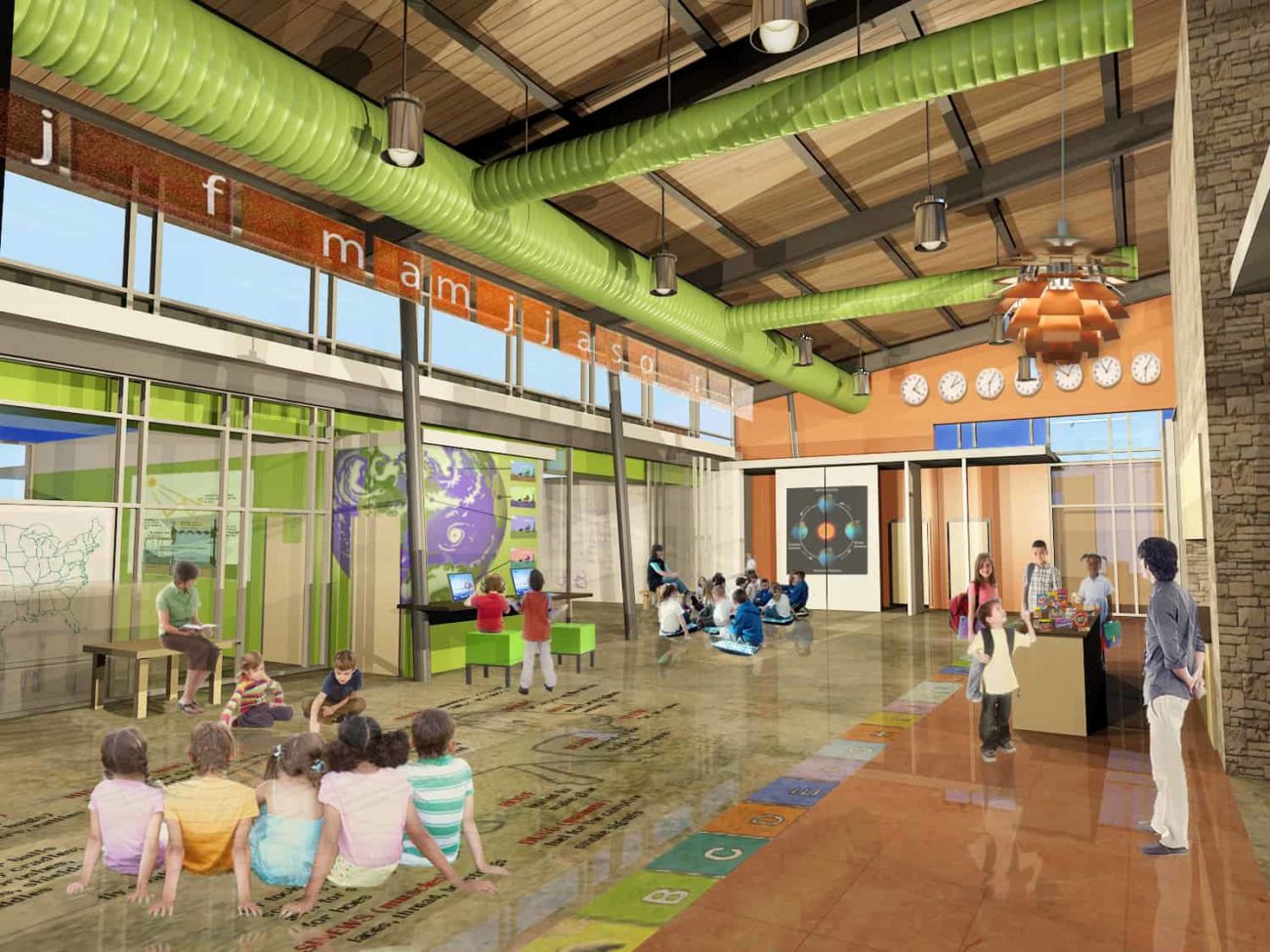
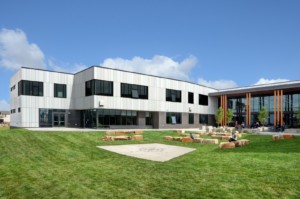
With the help of corporations, GSHS is on target to build donated, Leadership in Energy and Environmental Design (LEED) Platinum-designed, green schoolhouses on existing, low-income, public school campuses across the country, including Phoenix, Los Angles, San Diego, San Francisco, Chicago, Seattle, Atlanta, Boston, Philadelphia and Dallas with more locations expected beyond that. The first schoolhouse, called the Safari, is underway and will be completed this fall at Roadrunner Elementary School in Phoenix.
Some of the sustainable and advanced features of the schoolhouses include a solar rooftop system provided by Empire Renewable Energy, a STEM classroom sponsored by DeVry University, energy/water efficient restrooms provided by SLOAN and Excel Dryer, Inc., rainwater harvesting capabilities provided by BRAE and an outdoor classroom with native gardens provided by Blue Cross Blue Shield of Arizona.
Not only does this help jumpstart the much-needed STEM curriculum push, but it helps teachers, students and communities learn in classrooms that complement the curriculum of the future around sustainable living and building practices.



Sebastian
What a great idea - merging real world technology and material with education!
Sully
Nice article. My main concern is the reasoning behind why kids aren't doing well in STEM areas. If the teaching isn't different since the past or different than progressing third world countries, then why are we falling behind?
I believe it has to do with a complete lack of art in students lives. If I went to the gym and saw a man or woman lifting weights with only one side of their body to get in shape, I, and I think others would think it ridiculous. To get in shape one has to world out all areas of the body. But for some reason we have decided that this isn't the case with the brain. We've taken out all artistic stimulation from classroom training and then wonder why students aren't able to think outside the box, or be creative in the science field. Here's a list of right brain functions that the arts stimulate;
uses feeling
"big picture" oriented
imagination rules
symbols and images
present and future
philosophy & religion
can "get it" (i.e. meaning)
believes
appreciates
spatial perception
knows object function
fantasy based
presents possibilities
impetuous
risk taking
All of these things were crucial for Steve Jobs, Einstein, even Bill Gates. When we stop stimulating these functions in children, all we're left with is children who are automatons in the machine.
When you take away a child's creativity and they learn to only do what they are told, then they will always think that way and not push the boundaries of science and engineering. Until we bring a well rounded education back into the classrooms, it doesn't matter how much we spend or change the STEM curriculum or how it is taught, students won't dream or imagine like they once did.
Sebastian
You are correct Sully. It is with STEM learning that creativity is brought back into learning, instead of memorization. It is about problem solving and creativity. It is also about real world application. Arts are and should be very much part of STEM curriculum too.